Psychologist exposes Trump’s 'concerning' new stroke-like symptoms
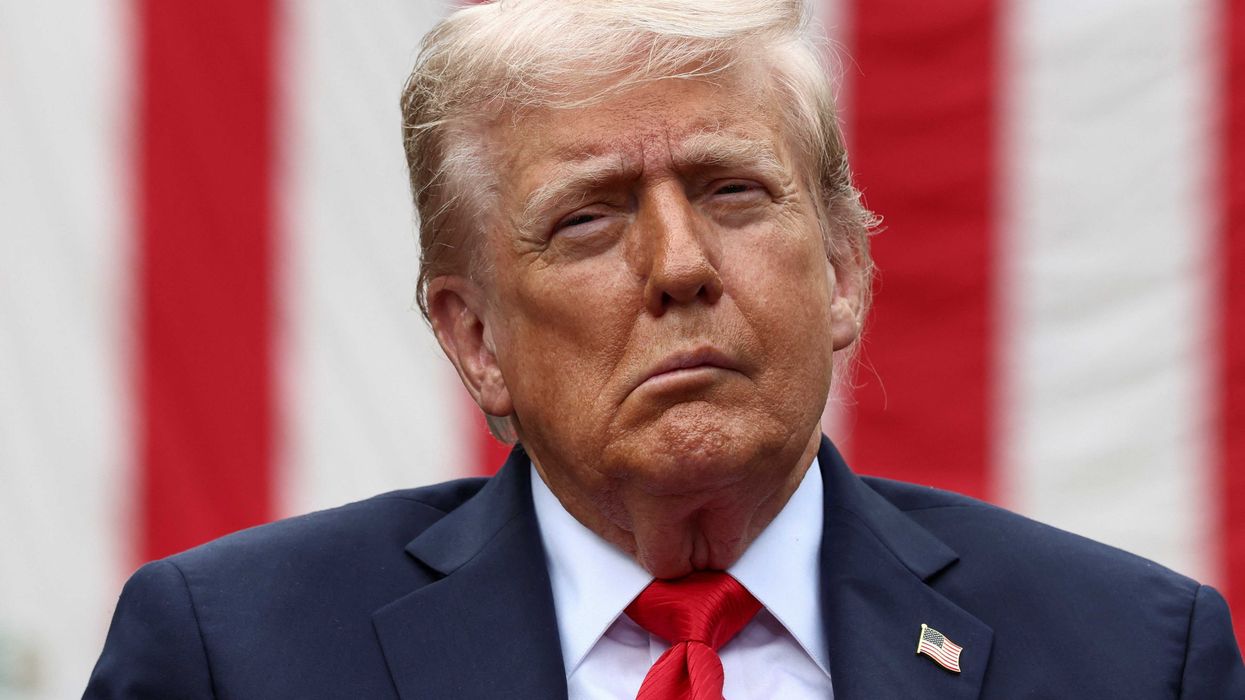
U.S. President Donald Trump attends a ceremony marking the 24th anniversary of the September 11, 2001, attacks on the United States at the Pentagon, in Washington D.C., U.S., September 11, 2025. REUTERSEvelyn Hockstein
U.S. President Donald Trump attends a ceremony marking the 24th anniversary of the September 11, 2001, attacks on the United States at the Pentagon, in Washington D.C., U.S., September 11, 2025. REUTERSEvelyn Hockstein
President Donald Trump exhibited "concerning behaviors" and symptoms on his right side during a recent public appearance, one psychologist noted in a new video, bearing an alarming resemblance to patients who have suffered a stroke.
Dr. John Paul Garrison is a clinical and forensic psychologist, with specific expertise in body language cues, who produces numerous videos offering professional insights into the behaviors of major public figures. Over the last few months, he has examined Trump during various speeches and appearances, noting many signs that point to significant neurological decline, even suggesting that he may have suffered a stroke sometime last year.
The latter issue was on full display in his latest video, in which Garrison highlighted a clip of Trump from his recent meeting with Ukrainian President Volodymyr Zelensky at the United Nations General Assembly, where strange symptoms were particularly focused on the right side of his body. He first noted an odd two-fingered gesture the president made after pulling back from a handshake with his Ukrainian counterpart, something that has already been dissected online.
"This clip has been making its rounds online. A lot of people seem to think that he's making a voluntary hand sign to people," Garrison explained. "Now, my interpretation is very different. To me, this does not look voluntary at all. To me, this looks like involuntary muscle contractions. Sometimes this can happen after a stroke. For example, when someone makes a quick movement or when someone shakes hands, sometimes there can be muscle contractions like this, particularly around the wrist and fingers, exactly like what we're seeing."
He continued: "If you watch President Trump's expression, you can see that he clearly knows that something's going on. It doesn't seem to be painful because you don't see him wincing. You don't see any acknowledgement of pain, but he certainly does seem to know that something's going on with his hand. But much like many of the other issues we've seen, he basically just ignores it and moves on."
Garrison also featured examples of odd hand issues during a more recent event in the Oval Office, which showed that the problem was not exclusive to his right side, as it cropped up in his left hand as well. At one point, the president "seemed like he was having a hard time articulating his fingers." During that event, Trump also made the "unusual" choice of keeping his right hand out of view beneath the Resolute Desk, something he almost never does. Garrison called this "a distinct change in behavior" that could be indicative of deeper issues.
"Something that's been very apparent recently is that President Trump's ability to sustain attention is totally gone," Garrison added, based on the Oval Office clip. "As soon as anybody else starts speaking, he's looking elsewhere. He's paying absolutely no attention to what's going on around him unless he's really excited about something. Aside from that, he can't seem to listen for more than a few seconds. The reason that matters is whether it's due to a neurodegenerative condition, whether it's due to a stroke or something else neurological, is that attention is a very complex brain activity. So, if we're seeing a shift or a change in that, it's worth paying attention to."