
Trump demands 'executive privilege' for private 'psychiatrist' and fixer
Kevin Lamarque/REUTERS
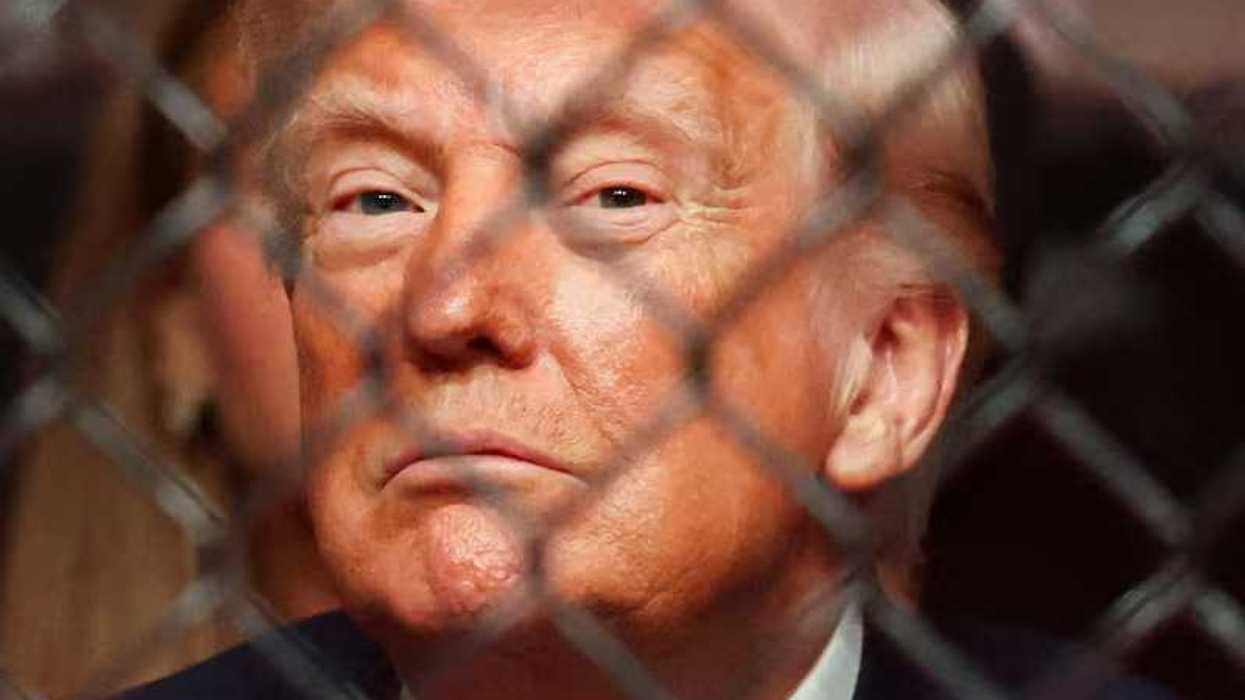
President Donald Trump sits ringside at UFC 327 in Miami.
August 10, 2026 | 08:50PM ETBank
President Donald Trump is trying to extend the concept of executive privilege, which solely protects the president and official appointees, to his so-called "kitchen cabinet" — that is, outside advisers who simply provide him with guidance.
"As court fight brews over demands for testimony and records from outside Trump advisers like Boris Epshteyn, DOJ's Office of Legal Counsel issues opinion arguing executive privilege extends to Kitchen Cabinet," Politico's Josh Gerstein argued on Monday.
"As a general matter, executive privilege can apply to presidential communications with private advisers so long as the communications (1) relate to official presidential decision making, (2) involve or reflect communications with the President or his direct advisers, and (3) are confidential," argued Assistant Attorney General T. Elliot Gaiser from the White House's Office of Legal Counsel on Monday.
He added, "Presidential communications with private advisers can fall within the scope of executive privilege so long as they relate to official presidential decision making, involve or reflect communications with the President or his direct advisers, and are confidential.Please let us know if we may provide any further assistance."
In June Trump joked that Epshteyn, a lawyer and political strategist who has long been part of his inner circle, as his "psychiatrist." He is also regarded as a central figure in formulating the president's legal strategies, for instance by playing a crucial role as a go-between interacting with law firms that Trump pressured into providing free pro bono work in return for not facing retaliation from the White House. At the same time, Epshteyn has also been accused of personally profiting from his close relationship with the president, even being investigated by some of Trump's other attorneys for that exact reason.
Because Epshteyn is close to Trump, the president is apparently concerned that efforts to compel the lawyer to testify about potential criminal conduct could hurt him.
This sweeping expansion of executive privilege marks a significant departure from historic legal norms, as courts have traditionally restricted this confidentiality shield to formal government employees to maintain public accountability. Critics argue that extending these protections to private citizens creates a dangerous loophole, allowing outside influencers to shape national policy in total secrecy.
Legal experts warn that the DOJ's new stance will trigger protracted constitutional battles, as congressional investigators and prosecutors challenge the administration's right to withhold testimony. If upheld, the decision could permanently redefine the boundaries of presidential power, shielding informal political fixers from judicial oversight.

